
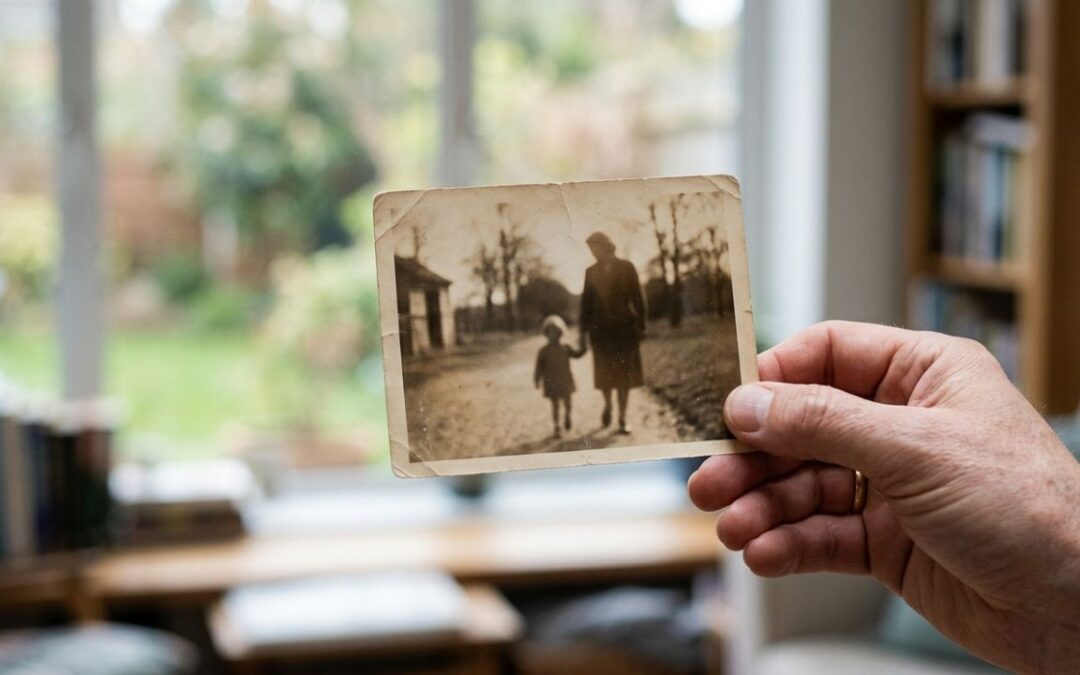
The Stories We Inherit and Mistake for Truth
“Many of our strongest beliefs about love, success, money, and power were inherited long before we examined them.”
Most people believe they are making independent decisions.
They assume the way they approach relationships, money, success, conflict, responsibility, and ambition simply reflects who they are.
And sometimes it does.
But often something deeper is happening.
They are responding to stories they inherited long before they ever had the opportunity to question them.
Stories about:
- Love
- Responsibility
- Success
- Money
- Power
- Conflict
- Ambition
- Worthiness
These stories quietly shape how people see themselves and the world around them.
The challenge is that inherited stories rarely arrive as stories.
They arrive as truth.
They feel obvious.
Natural.
Self-evident.
That is what makes them so powerful.
And often so invisible.
Inherited stories rarely arrive as stories.
They arrive as truth.
We Inherit More Than Genetics
Most people understand that families pass down physical traits.
Eye color.
Personality tendencies.
Health histories.
But families also pass down something far less visible.
Beliefs.
Expectations.
Emotional rules.
Roles.
Assumptions.
Relational strategies.
Without realizing it, many of us learned answers to important life questions long before we were old enough to evaluate them.
Questions such as:
- Who takes care of everyone else?
- Who gets to have needs?
- What does success require?
- What makes someone worthy of love?
- How is conflict handled?
- What happens when someone is disappointed?
- How is money viewed?
- What happens when someone becomes powerful?
These answers often become part of the emotional operating system we carry into adulthood.
Not because we consciously chose them.
Because we absorbed them.
Stories Become Patterns
One of the foundational observations of Relational Intelligence™ is that patterns rarely appear out of nowhere.
Patterns often begin as stories.
A child grows up watching one parent carry all the responsibility.
A story develops:
“If I want something done right, I have to do it myself.”
Another child grows up in a home where conflict feels dangerous.
A story develops:
“It’s safer not to say what I really feel.”
Someone grows up hearing money discussed with fear.
A story develops:
“There is never enough.”
Someone receives approval primarily through achievement.
A story develops:
“My value comes from what I accomplish.”
Over time, those stories become patterns.
The story creates the pattern.
The pattern creates the outcome.
And eventually the outcome feels so familiar that it appears inevitable.
But it is not inevitable.
It is practiced.
The story creates the pattern.
The pattern creates the outcome.
Familiar Is Not the Same as True
This is one of the most important distinctions within Pattern Awareness™.
What feels true is not always true.
Sometimes it is simply familiar.
Familiarity creates certainty.
And certainty often prevents examination.
Many people spend years defending beliefs they never consciously chose.
Not because they are resistant to change.
Because the story has become invisible.
It feels like reality.
This is why inherited narratives are so powerful.
They shape perception before they shape behavior.
And once perception is shaped, behavior often follows automatically.
Why Intelligent People Rarely Question Familiar Stories
One reason inherited stories persist is that they often work.
Or at least they worked at one point.
The over-functioner becomes highly responsible.
The achiever becomes successful.
The adapter becomes agreeable.
The controller becomes prepared.
The withdrawer avoids conflict.
The story appears validated.
Which makes it even harder to question.
The problem is not that the story was always wrong.
The problem is that many people never stop to ask whether it still serves the life they are building today.
What feels true is not always true.
Sometimes it is simply familiar.
Relational Intelligence™ Begins by Questioning Assumptions
One of the goals of Relational Intelligence™ is not simply helping people identify patterns.
It is helping people investigate the stories beneath those patterns.
Questions such as:
- Where did this belief come from?
- Who taught me this?
- Is this actually true?
- Does this belief still serve the life I am building?
- What if what feels true is simply familiar?
These questions create space.
And space creates possibility.
Because once a story becomes visible, it no longer operates automatically.
It becomes a choice.
Freedom Begins With Visibility
The goal is not blame.
Not parents.
Not childhood.
Not previous generations.
Every family passes something forward.
Every generation teaches stories they believe are useful.
The goal is awareness.
Because awareness creates freedom.
Freedom to choose intentionally.
Freedom to keep what serves you.
Freedom to release what no longer does.
Many of the beliefs shaping your life today were inherited.
But they do not have to remain unquestioned.
Closing Perspective
Pattern Awareness™ begins with a simple realization:
Many of the patterns shaping our lives did not begin with behavior.
They began with stories.
Stories about love.
Success.
Money.
Power.
Responsibility.
Worth.
The moment those stories become visible, something changes.
Choice returns.
And where choice returns, freedom becomes possible.
The question is not whether you inherited stories.
You did.
The question is:
Whose story are you still living?
That is where transformation begins.